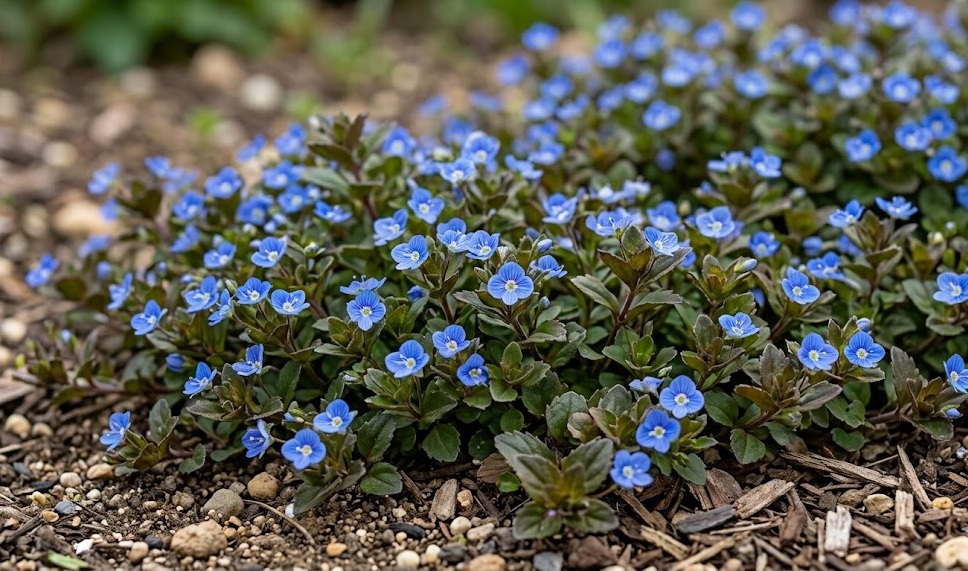

Regular maintenance through pruning is the best way to keep a groundcover looking neat, healthy, and professional. Georgia blue speedwell is a vigorous grower that responds well to trimming, allowing you to control its spread and encourage fresh new foliage. Whether you are removing spent flowers or rejuvenating an old patch, the timing and technique are crucial for the best results. This article provides detailed guidance on how to prune this variety to maintain its aesthetic appeal and long-term vitality.
Post-bloom maintenance and deadheading
The most important pruning task for Georgia blue speedwell usually occurs right after the main flush of spring flowers has faded. While deadheading individual flowers is impractical for a groundcover, a light shearing across the top of the plant is very effective. This process removes the spent flower spikes and any seed heads that may be forming, which keeps the plant looking tidy. It also prevents the plant from putting energy into seed production, redirecting those resources back into the foliage and roots.
Using a pair of sharp garden shears or even manual hedge trimmers makes this job quick and easy for larger areas. The goal is to just clip off the top inch or two of growth, taking care not to cut into the woody base of the plant. This light “haircut” often stimulates a fresh flush of green leaves, which makes the groundcover look rejuvenated and vibrant for the rest of the summer. In some cases, a light shearing can even encourage a small, secondary bloom later in the season.
Keeping the foliage low and dense through regular trimming helps to maintain the plant’s effectiveness as a weed suppressant. If the stems are allowed to become too long and leggy, gaps can form in the carpet where weeds can easily take root. A professional-looking groundcover should appear uniform and compact, following the contours of the ground or the edges of a path. Regular maintenance pruning is a small investment of time that pays off in a much more attractive landscape.
Always ensure that your pruning tools are clean and sharp before you begin working in the garden. Dull blades can tear the delicate stems of the speedwell, leaving ragged edges that are more susceptible to disease. Cleaning your tools with a simple disinfectant after use prevents the spread of pathogens between different plants. This attention to detail is a hallmark of professional garden care and ensures that your plants stay as healthy as possible.
More articles on this topic
Shaping and size control
Georgia blue speedwell is a creeping plant that can eventually spread beyond its intended boundaries if not kept in check. Pruning the edges of the patch is necessary to keep it from encroaching on walkways, lawn areas, or other more delicate perennials. This can be done at any time during the growing season, but early summer is often the most effective time for controlling spread. Simply use a spade or sharp shears to cut back the stems to the desired limit of the bed.
If the plant is spilling over a stone edge or a retaining wall, you can decide how much of that “overflow” look you want to maintain. Some gardeners prefer a very neat and contained border, while others enjoy the soft, natural look of the foliage drapon over the stones. Whichever style you choose, regular trimming ensures that the effect remains intentional and does not look neglected. Controlling the shape of the groundcover is a key part of maintaining the overall design and structure of the garden.
Thinning out a very dense patch can also be beneficial if the air circulation in the center of the bed has become poor. If you notice that the leaves in the middle are yellowing or showing signs of mildew, it may be time to remove some of the older stems. This allows light and air to reach the soil surface and the lower parts of the plant, promoting better overall health. A well-managed groundcover is a dynamic system that sometimes needs a bit of space to breathe.
When cutting back the edges, you can often use the removed stems for propagation if they have already started to form roots. This is a great way to expand your planting or share the variety with friends without any extra cost. The creeping nature of the speedwell makes it very easy to manage once you understand its growth habits. Professional gardening is often about working with the plant’s natural tendencies to achieve the best visual and functional results.
More articles on this topic
Rejuvenation pruning for older patches
Over several years, a patch of Georgia blue speedwell may become woody at the base or start to look thin in the center. When this happens, a more aggressive approach called rejuvenation pruning can be very effective in restoring the plant’s vigor. This involves cutting the entire patch back to within a few inches of the ground in the early spring before new growth begins. While it may look a bit bare for a few weeks, the plant will quickly respond with a flush of healthy, vibrant new shoots.
This hard pruning is best done every three to four years or whenever the groundcover starts to lose its professional appearance. It is a great way to clear out any accumulated dead material and refresh the entire bed at once. After a rejuvenation prune, it is helpful to apply a light layer of compost and ensure the plants are well-watered to support the rapid new growth. The result is a much denser and more uniform carpet of foliage that looks like a brand-new installation.
If you are hesitant to cut back the entire area, you can try doing it in sections over a couple of seasons. This ensures that you always have some green coverage in the garden while the other parts are recovering. However, most gardeners find that the blue speedwell is so resilient that it bounces back very quickly from a hard prune. Taking this proactive step prevents the groundcover from becoming a messy or unattractive feature in your landscape.
Understanding the difference between light maintenance trimming and heavy rejuvenation pruning is a sign of an experienced gardener. Each technique has its place in a long-term care plan and helps to ensure the plant remains a beautiful part of the garden for many years. Georgia blue speedwell is a rewarding and forgiving plant that responds beautifully to the right touch. By following these professional pruning guidelines, you can maintain a stunning and healthy garden that you can be proud of.