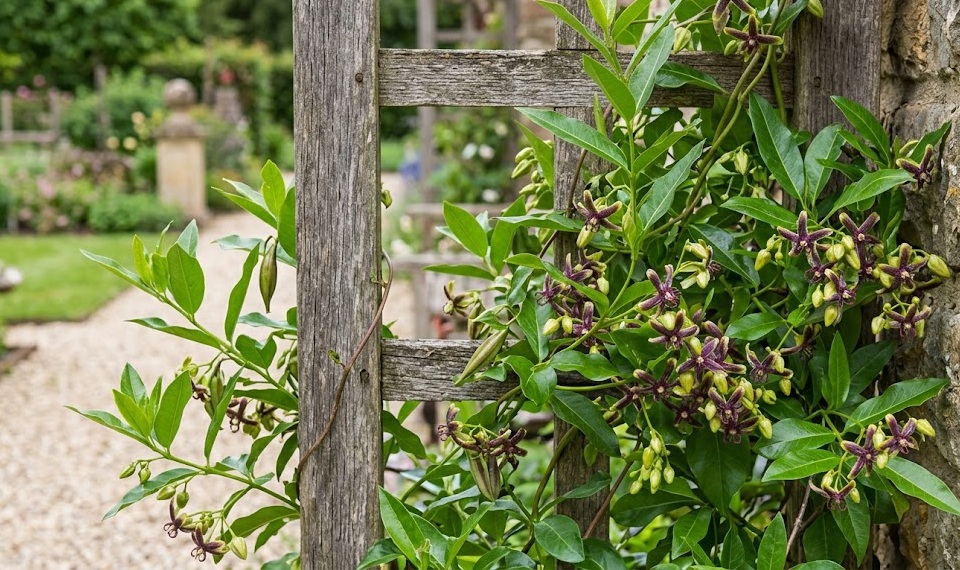

Proper hydration and nutrient management are the cornerstones of maintaining a lush and healthy silkvine throughout the growing season. While this climber is naturally robust, its massive leaf surface area leads to significant water loss through transpiration during the hot summer months. Balancing the need for moisture with the requirement for specific minerals ensures that the plant remains resistant to environmental stressors. A professional approach to these tasks will result in a more vigorous plant with deeper green foliage and more consistent flowering cycles.
Establishing a watering routine
The frequency of irrigation depends heavily on the age of the vine and the specific soil conditions of your garden. Young, newly planted vines require consistent moisture to help their root systems expand into the surrounding soil profile. You should aim to keep the soil evenly damp but never saturated, as excess water can lead to root pathogens. Once the plant is established, it can handle short periods of drought, but its growth will slow down noticeably.
Deep watering is far more effective than frequent, shallow applications of water for a large climber like this. You should apply water slowly at the base of the plant to allow it to penetrate deep into the lower soil layers where the main roots reside. This encourages the roots to grow downward, making the plant more resilient to heatwaves and dry spells in the future. Using a soaker hose or a drip irrigation system is an excellent way to provide controlled and efficient hydration.
Environmental factors such as wind, temperature, and humidity will dictate how often you need to reach for the watering can. During the peak of summer, you may find that the vine requires a deep soak every three to four days if there is no significant rainfall. Conversely, during the cool and rainy periods of spring and autumn, you should reduce the frequency to prevent the soil from becoming waterlogged. Always check the moisture level a few centimeters below the surface before deciding to add more water.
More articles on this topic
Mulching is a professional secret that significantly reduces the amount of supplemental watering required for your garden. By applying a five to eight-centimeter layer of wood chips, bark, or straw, you can insulate the soil and prevent evaporation. This layer also keeps the root zone cooler during the hottest parts of the day, which reduces the physiological stress on the vine. Be sure to keep the mulch a few centimeters away from the actual stem to prevent moisture-related rot on the bark.
Nutrient requirements for vigorous growth
Providing the right nutrients at the right time is essential for supporting the rapid extension of the silkvine stems. You should focus on a balanced fertilizer that contains equal parts nitrogen, phosphorus, and potassium during the early spring. Nitrogen is particularly important for this species as it fuels the production of the lush, green leaves that make it so attractive. A slow-release granular formula is often the most convenient choice for busy gardeners who want long-lasting results.
As the plant transitions into its flowering phase in mid-summer, you might consider a fertilizer with a slightly higher phosphorus content. This helps the plant allocate more energy toward developing its unique blossoms rather than just producing more green stems. However, you should avoid over-fertilizing with nitrogen late in the summer, as this can stimulate soft growth that is easily damaged by early frosts. Always follow the manufacturer’s instructions regarding dosage to avoid chemical burns to the roots.
More articles on this topic
Organic amendments offer a sustainable way to improve both the soil structure and the nutrient profile over the long term. Applying a layer of well-rotted compost or composted manure every spring provides a steady supply of micronutrients that synthetic fertilizers might lack. These organic materials also encourage beneficial microbial activity in the soil, which helps the plant absorb nutrients more efficiently. It is a natural way to build a healthy ecosystem that supports the vine’s aggressive growth habits.
Signs of nutrient imbalance should be monitored closely to ensure the plant stays in peak condition throughout the year. If you notice the leaves becoming pale or yellow while the veins remain green, it may indicate a deficiency in iron or magnesium. Stunted growth or unusually small leaves can be a sign that the plant is simply hungry and needs a more consistent feeding schedule. Conversely, dark, brittle leaves or salt crusts on the soil surface might suggest that you are applying too much fertilizer.