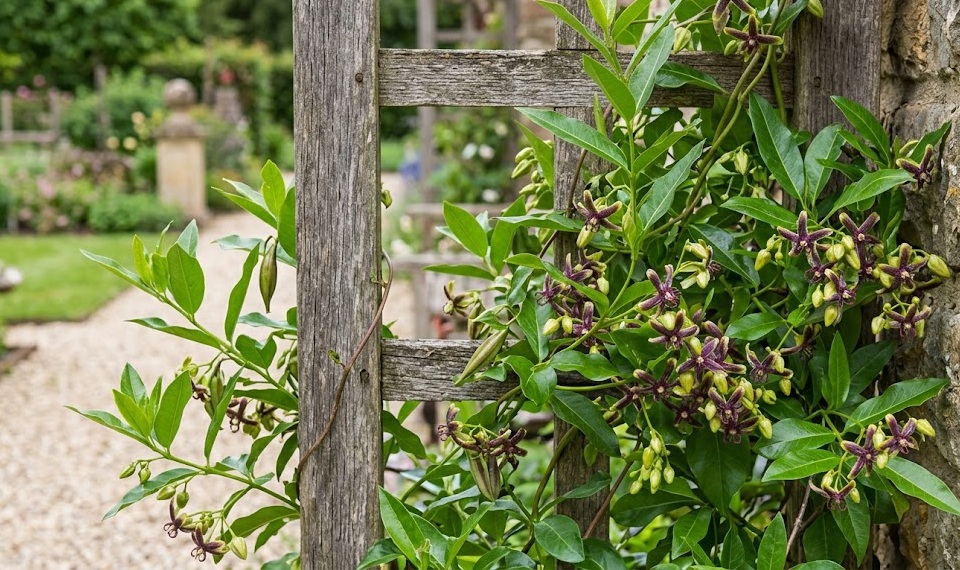

Successfully establishing a silkvine in your landscape requires careful planning and an understanding of its reproductive biology. Whether you are starting with a young nursery plant or attempting to grow new specimens from scratch, the initial steps determine the future vigor of the vine. This species is known for its resilience once established, but it is quite sensitive during the early stages of root development. By following professional planting techniques and propagation methods, you can ensure a high success rate and a healthy, fast-growing climber.
Selecting the perfect planting site
The location you choose for your silkvine will have a permanent impact on its growth rate and flowering potential. You must find a spot that receives full sun for at least six to eight hours a day to promote strong stem development. While it can survive in partial shade, the growth will be significantly slower and the foliage will be much less dense. Consider the proximity to buildings or other permanent structures, as the roots can be quite expansive over time.
Soil preparation is the next critical step before the plant ever touches the ground in your garden. You should dig a hole that is at least twice as wide and just as deep as the current root ball of your sapling. Mixing the native soil with well-rotted compost or aged manure will provide a nutrient-rich environment for the young roots. Ensure that the drainage is impeccable, as these plants do not tolerate having their roots submerged in water for extended periods.
The actual process of planting should ideally take place in the early spring or late autumn when the weather is mild. You should carefully remove the plant from its container, taking great care not to damage the delicate root system. Place the vine in the center of the hole at the same depth it was growing in the pot to avoid stem rot. Firm the soil down gently with your hands to remove any large air pockets that could dry out the roots.
More articles on this topic
Immediately after planting, a thorough watering is essential to help settle the soil and hydrate the plant. You should also consider applying a thin layer of organic mulch around the base to help retain moisture and suppress competing weeds. If the vine is already tall, gently tie the main stems to your support structure to provide immediate stability against the wind. Consistent monitoring for the first few weeks will help the plant overcome any initial transplant shock.
Effective propagation through cuttings
Taking softwood cuttings in the early summer is one of the most reliable ways to create new silkvine plants. You should select healthy, non-flowering shoots that are approximately ten to fifteen centimeters in length for the best results. Make a clean cut just below a leaf node and remove the lower leaves to expose the stem surface. Using a rooting hormone can increase the chances of success, although it is not strictly mandatory for this vigorous species.
Insert the prepared cuttings into a moist, well-draining propagation mix consisting of peat and perlite or sand. You should keep the cuttings in a warm, bright location but away from direct, scorching sunlight which could wither them. Maintaining high humidity by covering the tray with a clear plastic dome or bag will prevent excessive moisture loss through the leaves. Roots typically begin to form within four to six weeks if the conditions are kept consistently warm and damp.
More articles on this topic
Hardwood cuttings offer an alternative method that can be performed during the dormant season in late winter. You should choose mature, woody stems from the previous year’s growth and cut them into sections of about twenty centimeters. These cuttings can be planted directly into a sheltered outdoor nursery bed or kept in deep pots over the winter. This method is often preferred by professional growers because it requires less intensive daily management than softwood cuttings.
Once the cuttings have developed a robust root system, they must be gradually hardened off before permanent planting. You should slowly expose them to outdoor conditions over a period of ten days to two weeks to avoid shocking the young tissues. Transplanting them into larger individual pots will allow them to gain more strength before they are introduced to their final location. This careful transition ensures that the new vines are strong enough to withstand the elements and competition.