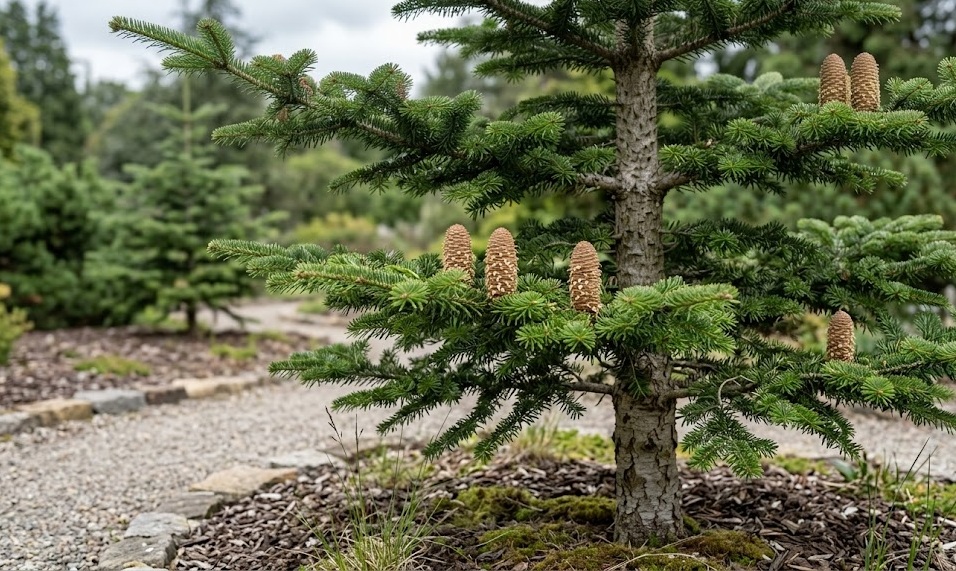

Pruning and trimming the Greek fir is a specialized task that requires a light touch and a clear understanding of the tree’s natural growth habits. Unlike many deciduous trees that can recover from heavy-handed pruning, most conifers—including the Greek fir—do not easily regenerate new growth from old wood. You must approach any cutting with a professional mindset, focusing on enhancing the tree’s natural form rather than trying to force it into an artificial shape. By following the correct timing and techniques, you can maintain a healthy, structurally sound, and beautiful specimen that serves as a cornerstone of your landscape for decades.
Goals and principles of conifer pruning
The primary goal of pruning a Greek fir should always be to maintain its health and natural architectural beauty with the minimum amount of interference. You should focus on the “three Ds”: removing any wood that is dead, damaged, or diseased, as these can become entry points for pests and pathogens. Beyond this essential maintenance, pruning is rarely necessary for the tree’s survival and is usually done for aesthetic reasons or to manage the tree’s size within a specific space. You must always remember that every cut you make is a permanent change that the tree will have to live with for the rest of its life.
One of the most important principles to understand is that the Greek fir, like most Abies species, has a strong “apical dominance,” meaning it naturally grows from the tip of its central leader. You should avoid cutting the main leader unless it is absolutely necessary, as this will destroy the tree’s symmetrical shape and lead to a stunted, bushy appearance. If the leader is lost due to storm damage, you must carefully train a side branch to take its place to restore the tree’s vertical growth. This process requires patience and precise technique to ensure the new leader is properly aligned with the main trunk.
When you do need to remove a branch, you should always make your cuts at the “branch collar”—the slightly swollen area where the branch meets the trunk or a larger limb. Cutting too close to the trunk (a flush cut) or leaving too long of a stump can prevent the tree from properly sealing the wound, leading to rot or infection. You should use sharp, high-quality tools that make clean cuts without tearing the bark or crushing the delicate cambium layer. Sterilizing your tools with rubbing alcohol between trees, and even between major cuts, is a professional standard that prevents the spread of diseases.
Timing is critical when it comes to pruning, as you want to minimize the amount of sap the tree loses and ensure it has time to recover before the next growth cycle. The best time to prune a Greek fir is in the late winter or very early spring, while the tree is still dormant but just before the new growth begins. At this time, the sap is not flowing as strongly, and the cooler temperatures reduce the risk of pests being attracted to the fresh cuts. Avoid pruning in the late summer or autumn, as this can stimulate new growth that will not have time to harden off before the first frost.
More articles on this topic
Shaping and managing growth
If you want to create a denser, fuller appearance in your Greek fir, you can use a technique called “candling,” which is commonly used on pines but can be adapted for firs. This involves pinching back a portion of the soft, new growth in the spring before the needles fully expand. By removing the tip of the new shoot, you encourage the tree to put more energy into the remaining buds, resulting in shorter, thicker branches. You should only remove about one-third to one-half of the new growth to avoid stressing the tree and to ensure it still has enough foliage to photosynthesize.
Managing the lower branches of the Greek fir is often a matter of personal preference and the specific needs of your landscape. In its natural state, the tree often retains its branches all the way to the ground, creating a magnificent green pyramid. However, if you need to provide clearance for walking or to allow more light to reach ground-level plants, you can “lift” the canopy by removing the lowest tiers of branches. This should be done gradually over several years to avoid shocking the tree and to allow it to adjust its structural balance as the weight distribution changes.
You should be extremely cautious about “topping” a Greek fir or trying to drastically reduce its height, as this is one of the most damaging things you can do to a conifer. Topping destroys the tree’s natural leader and leaves a large, flat wound that rarely heals properly and is highly susceptible to decay. Instead of height reduction, you should focus on “thinning” cuts that remove entire branches back to their point of origin to improve air circulation and light penetration. If a tree has truly outgrown its space, it is often better to replace it with a smaller species than to try to maintain it through destructive pruning.
For trees that have developed multiple leaders due to past damage or poor pruning, you should select the strongest and most central one to remain and remove the others. This restores the tree’s primary vertical axis and prevents the development of “included bark,” which is a structural weakness where two trunks press against each other. Having a single, strong trunk is vital for the tree’s ability to withstand heavy snow and strong winds without splitting. This kind of corrective pruning is best done while the tree is still relatively young and the branches are easier to manage.
More articles on this topic
Post-pruning care and recovery
After you have finished pruning your Greek fir, the tree will need a little bit of extra attention to ensure it recovers quickly and remains healthy. You should provide a deep watering to help the tree deal with the minor stress of the pruning process and to support the upcoming spring growth spurt. While some people recommend using “pruning paint” or sealants on the wounds, most professional arborists now agree that these can actually trap moisture and fungus against the wood. It is better to let the tree heal itself naturally by forming a protective layer of “callus wood” over the clean, professional cuts you have made.
You should monitor the pruned areas throughout the following growing season for any signs of unusual sap weeping, fungal growth, or pest activity. Fresh cuts can sometimes attract bark beetles or other insects that are sensitive to the chemical signals released by the wounded tree. If you notice any problems, you should address them immediately with the appropriate biological or chemical treatments to prevent them from spreading. A healthy, well-maintained tree will usually seal its wounds within a year or two, leaving behind only a small scar as a reminder of your work.
Avoid applying a heavy dose of fertilizer immediately after pruning, as you don’t want to force the tree to produce a massive amount of new growth while it is still healing its wounds. A light, balanced application of organic fertilizer in the spring is fine, but the focus should remain on stability and steady growth. You want the tree’s energy to be directed toward both the expansion of its canopy and the strengthening of its existing structural wood. This balanced approach to post-pruning care ensures that your Greek fir remains a resilient and long-lived part of your garden.
Finally, you should keep a record of when and why you pruned your tree, as this will help you track its response over the coming years. You will begin to see how the tree reacts to different types of cuts and timing, which will make you a much more effective and confident gardener. Every Greek fir is a unique individual, and by paying close attention to its specific growth patterns, you can refine your pruning technique to achieve the best possible results. Your thoughtful and expert care is what will allow this Mediterranean majesty to truly flourish under your stewardship.