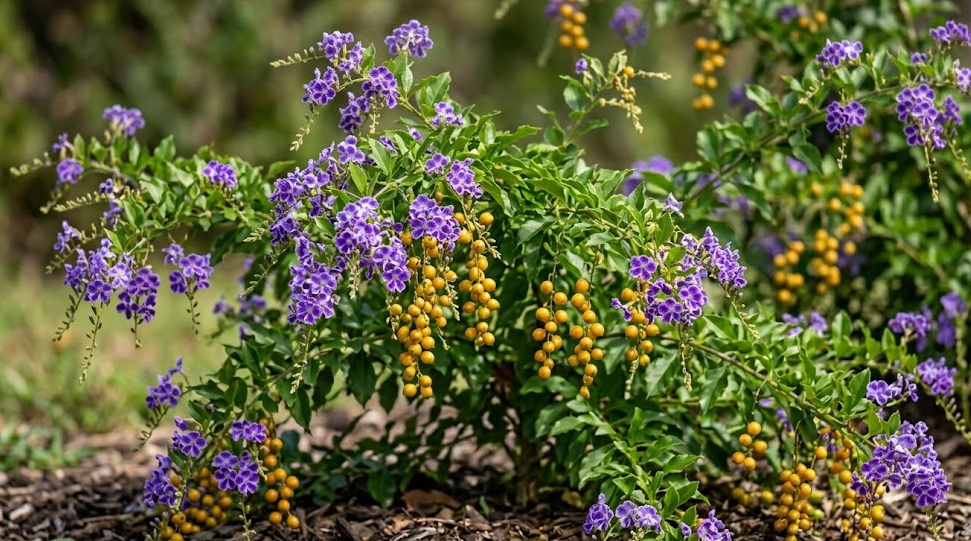

Pruning is one of the most important and rewarding tasks in the care of a golden dewdrop, allowing you to guide its growth and maximize its beauty. Because this species is such a vigorous grower, it can quickly become unruly if left to its own devices for too long. Regular cutting back not only maintains the desired shape but also stimulates the production of new flowers and the iconic golden berries. Mastering the art of pruning will turn you from a simple gardener into a true sculptor of the landscape.
The best time for major structural pruning is in the early spring, just before the plant begins its main flush of new growth. This allows the plant to heal its wounds quickly and put all its energy into the branches you have chosen to keep. You can also do light maintenance pruning throughout the growing season to remove spent flowers or stray branches. A consistent and thoughtful approach to cutting back is the key to a long-lived and healthy specimen.
Always use high-quality, sharp tools to ensure that your cuts are clean and don’t crush the delicate plant tissues. Ragged cuts are not only unattractive but also provide an easy entry point for diseases and pests that can weaken the plant. Professional gardeners take pride in their tools and the precision of their work, knowing that every cut affects the future of the shrub. Hygiene and accuracy are the foundations of expert pruning practices.
Understanding the natural growth habit of the golden dewdrop is essential for deciding where and how much to cut. It has a graceful, weeping form that is best highlighted by careful thinning rather than heavy-handed shearing. You should aim to work with the plant’s natural tendencies rather than trying to force it into a rigid or unnatural shape. A well-pruned shrub should look elegant and effortless, enhancing the overall aesthetic of your garden design.
Structural pruning for aesthetic shape
The first goal of structural pruning is to create a strong framework of healthy branches that can support the weight of the foliage and berries. You should begin by removing any dead, damaged, or crossing branches that might compromise the plant’s integrity over time. This opens up the center of the shrub to better light and airflow, which is critical for long-term health. A clear structure is the foundation upon which all the future beauty of the plant will be built.
More articles on this topic
Deciding whether you want to grow your plant as a sprawling shrub, a formal hedge, or even a small tree is an important early step. For a tree-like form, you should select a single strong stem and remove all the lower side branches to create a clear trunk. If you prefer a hedge, you will need to prune more frequently to encourage dense growth from the base of the plant. Your pruning strategy should always be aligned with your overall vision for the garden landscape.
Thinning out the outer canopy allows the inner parts of the plant to stay productive and prevents the shrub from becoming hollow in the middle. You should selectively remove some of the older wood to make room for the younger, more vibrant shoots that will carry next year’s flowers. This renewal process keeps the entire specimen looking fresh and full of life for many years. Expert pruning is as much about what you leave behind as it is about what you take away.
Always take a few steps back from the plant every few minutes to assess your progress and ensure you are maintaining a balanced shape. It is very easy to get caught up in the details and end up with an asymmetrical shrub if you don’t keep the big picture in mind. Patience and a steady hand are required as you slowly reveal the best version of your plant. A successful pruning session is a deeply satisfying blend of art and science that yields immediate visual results.
Techniques for rejuvenation cutting
If you have a specimen that has become overgrown, woody, and unproductive, a more drastic rejuvenation pruning might be necessary. This involves cutting the entire plant back to within a foot of the ground to trigger a flush of completely new growth from the base. While it can be a bit scary to cut a large shrub so severely, the golden dewdrop is remarkably resilient and usually responds very well. This technique is like hitting the “reset” button for an old and tired plant.
More articles on this topic
Rejuvenation is best done in the very early spring when the plant has the most stored energy to support its recovery. You should be prepared to provide a bit of extra water and a balanced fertilizer to help the new shoots get a strong start. Within just a few weeks, you will see many small green buds breaking through the old bark. It is an amazing demonstration of the plant’s natural vitality and its ability to reinvent itself.
As the new shoots grow, you will need to select the strongest ones to form the new structure and remove the rest to prevent overcrowding. This is your chance to correct any mistakes in the plant’s previous shape and build a better foundation for the future. You can guide the new growth with soft ties and stakes if necessary to ensure it goes exactly where you want it. Rejuvenation pruning is an investment in the next decade of the plant’s life in your garden.
For plants that are old but not quite ready for such a drastic measure, you can use a “three-year plan” for renewal. Each year, you remove one-third of the oldest branches right down to the ground, allowing new shoots to replace them gradually. By the end of the third year, the entire plant has been replaced with fresh, productive wood without the shock of a single massive cut. This more conservative approach is often preferred by professional gardeners for valuable or sensitive specimens.
Stimulating flowers and berries through pruning
The golden dewdrop produces its flowers on the current season’s growth, which means that regular pruning actually encourages more blooms. By cutting back the stems after each flowering cycle, you stimulate the plant to produce a new set of branches and another round of flowers. This “deadheading” process can significantly extend the period of beauty in your garden throughout the summer and autumn. It is a simple but effective way to get more value from your plants every single year.
If you want to maximize the production of the golden berries, you should be careful not to prune away all the flowers as they begin to fade. The berries develop from the pollinated blossoms, so you must leave enough of the canopy untouched for the fruit to set and ripen. Finding the balance between encouraging new flowers and allowing the berries to mature is a nuanced part of expert care. The combination of purple flowers and orange berries on the same branch is a stunning sight that is well worth the effort.
Late-season pruning should be done with care to avoid stimulating a flush of soft growth that won’t have time to harden off before the winter. In many climates, it is best to stop any major cutting back by late summer to allow the plant to prepare for its dormant phase. You can still remove dead or damaged wood, but leave the main shaping for the following spring. Professional horticulture is always about thinking several months ahead of the current season.
Finally, remember that every plant is an individual and will respond slightly differently to your pruning efforts. Keep a close eye on how your golden dewdrop reacts to your techniques and adjust your methods as you gain more experience. Gardening is a lifelong learning process, and the plant is your best teacher if you are willing to observe. With a pair of sharp shears and a bit of expert knowledge, you can ensure your shrubs remain a highlight of your garden for many years to come.
When it comes to pruning Duranta, I cannot stress enough the importance of using sterilized, sharp bypass pruners. Because this plant is such a vigorous grower, ragged cuts can become entry points for pathogens, especially in humid climates. I typically perform a hard rejuvenation prune in early spring just as the new buds begin to swell. This encourages a flush of new growth that carries the most flowers. If you wait too late in the season to prune, you risk cutting off the current year’s flower buds. I’ve found that a “one-third rule” works wonders for maintaining the health of older specimens. By removing the oldest third of the canes each year, you keep the plant perpetually youthful.
Thomas, that “one-third rule” is something I recently started implementing, and the results have been fantastic. I used to be afraid of cutting back too hard, but the golden dewdrop is incredibly resilient. One thing I struggle with is the timing for the “light tidying” mentioned in the article versus the major structural pruning. Do you find that deadheading individual flower clusters helps prolong the blooming season significantly? I’ve been doing it sporadically, but I’m not sure if the labor is worth the output in a large garden. It seems like the plant just wants to keep pushing out new growth regardless of what I do.
For those using golden dewdrop as a hedge, I recommend a slightly tapered pruning style where the base is wider than the top. This allows sunlight to reach the lower branches, preventing the “leggy” look where the bottom of the hedge becomes sparse and bare. I usually perform three light shearings throughout the summer to maintain the geometric shape. If you let it go for too long, the inner branches will lose their leaves due to shading. Then, when you finally prune it back, you’re left with a bunch of brown sticks for several weeks. Consistency is definitely the key to keeping this plant looking professional and well-manicured.
I would like to add a note about the thorns that some varieties of golden dewdrop develop as they mature. When pruning, it is essential to wear heavy-duty gloves to avoid skin irritation and punctures. I’ve noticed that older, more established branches tend to have much more aggressive thorns than the soft, new growth. If you are pruning for shape, try to identify the main structural branches early in the plant’s life. This makes the long-term maintenance much safer and easier to manage. This plant is a fantastic grower, but it certainly demands respect during the pruning process.