
Understanding the light requirements of English bluebells is essential for any gardener wishing to recreate the ethereal beauty of a woodland spring. These plants have evolved to exploit a very specific “light window” that occurs between the end of winter and the closing of the forest canopy. While they are often described as shade-loving, their relationship with sunlight is actually quite nuanced and dynamic. This article explores how to balance light and shadow to ensure your bluebells reach their full potential in both color and vigor.
The concept of dappled shade
In their native habitat, English bluebells are found in the understory of ancient deciduous woodlands, dominated by trees like oak and beech. This environment provides what horticulturists call “dappled shade,” where sunlight filters through the budding branches in a constantly moving pattern. This light is bright enough to power photosynthesis but soft enough to prevent the soil from drying out too quickly. Recreating this effect is the gold standard for a professional bluebell display.
The timing of this light is critical because the bluebells must complete most of their life cycle before the trees are in full leaf. Once the canopy closes in late spring, the light levels on the forest floor drop by over 90 percent. This rapid change triggers the plants to start shutting down and moving their energy back into the bulbs. Without this period of high-intensity spring light, the bulbs will gradually weaken and eventually stop flowering.
If you are planting bluebells in a garden without large trees, you can use tall shrubs or even the shadow of a building to provide protection. The goal is to ensure the plants are not exposed to the harsh, direct sun of the mid-day, especially as the season progresses. Morning sun followed by afternoon shade is often an ideal compromise for gardens with limited tree cover. Observing how the shadows move across your garden throughout the day will help you find the perfect spot.
Professional designers often use “light-management” techniques, such as thinning the canopy of overhanging trees (crown lifting). This allows more light to reach the ground during the critical spring months without removing the essential summer shade. By carefully managing the upper layers of your garden, you create a better environment for everything growing below. This holistic approach to light is a hallmark of high-level landscape management.
More articles on this topic
Sunlight and flower pigmentation
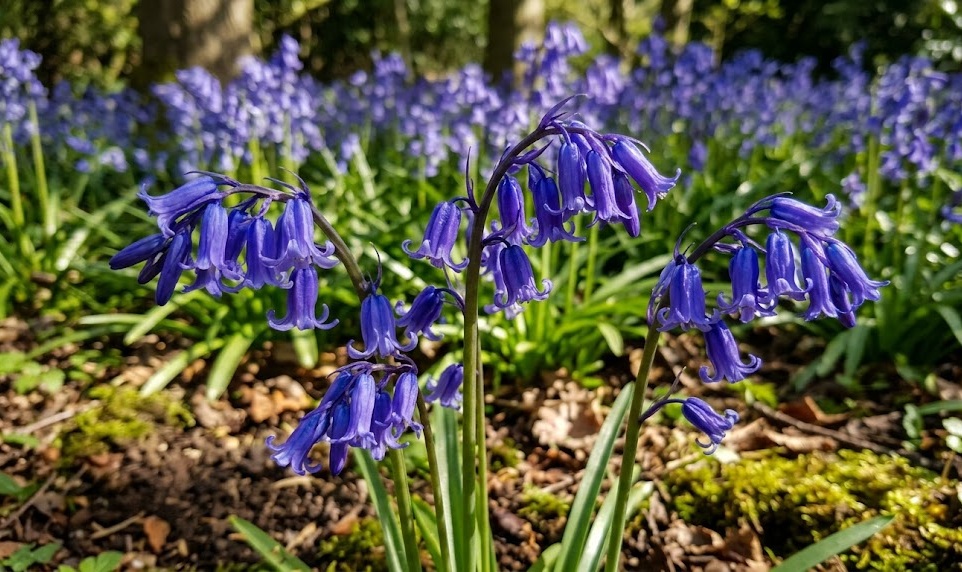
The intensity and quality of light directly affect the color and scent of the English bluebell’s flowers. In areas with too much shade, the flowers may appear pale, almost washed-out, and the stems may become leggy as they “stretch” toward the light. Conversely, in the right light conditions, the petals develop that deep, violet-blue pigment that is so characteristic of the species. The ultraviolet component of natural sunlight plays a role in triggering these color-producing compounds.
Photosynthesis is the engine that drives the production of the sugars and starches stored in the bulb. Because bluebells have a very short growing season, they must work with incredible efficiency during their few weeks of green growth. Maximum light exposure during the pre-flowering stage ensures the plant has enough “fuel” to produce a large, multi-flowered spike. A professional gardener knows that this year’s light is what determines next year’s bloom.
Scent is another factor influenced by the warmth and light of the spring sun. The delicate, sweet fragrance of the English bluebell is most noticeable on still, sunny days when the warmth helps volatilize the floral oils. In a dark, cold corner of the garden, the scent may be barely perceptible, reducing the overall sensory experience. Positioning your drifts where they can catch the warmth of the early sun will enhance the enjoyment of your garden.
It is also worth noting that the invasive Spanish bluebell is much more tolerant of full sun than the native English variety. If you see bluebells thriving in a hot, open meadow, they are almost certainly not the native Hyacinthoides non-scripta. Maintaining the correct light levels is one way to ensure that your garden remains a hospitable place for the native species and less attractive to its tougher cousins. Professional identification often starts with observing where and how the plant is growing.
More articles on this topic
Adapting to seasonal light changes
As the spring progresses into summer, the light requirements of the bluebell change from “maximum possible” to “protected and cool.” This transition mirrors the natural leafing-out of the woodland trees, which provides a cooling umbrella for the dormant bulbs. If a large tree is removed from your garden, the sudden increase in summer light can actually stress the buried bulbs by heating the soil. In such cases, you may need to provide a “living mulch” of summer perennials to restore the shade.
Using other plants to manage light levels is a sophisticated professional technique known as successional planting. Ferns, hostas, and hellebores are excellent partners because they thrive in the heavy shade that follows the bluebell season. Their large leaves act as a thermal barrier, keeping the ground temperature stable and the soil moisture consistent. This ensures that the bluebells’ dormant period is as restorative as possible.
Reflected light from light-colored walls or fences can also be a factor in urban gardens. While this extra light can be helpful in very dark corners, it can also increase the temperature and cause the flowers to fade prematurely. You can mitigate this by planting a “screen” of light-textured shrubs like philadelphus or amelanchier. These provide the necessary diffusion of light while adding their own beauty to the garden’s spring palette.
Finally, always remember that the light levels in your garden will change as the years go by and your trees grow larger. A spot that was perfect five years ago might now be too dark, requiring you to thin the branches above. Professional gardening is an ongoing dialogue with the environment, requiring you to adjust and adapt to these natural shifts. By staying observant, you can ensure your bluebells always have exactly the right amount of light to shine.