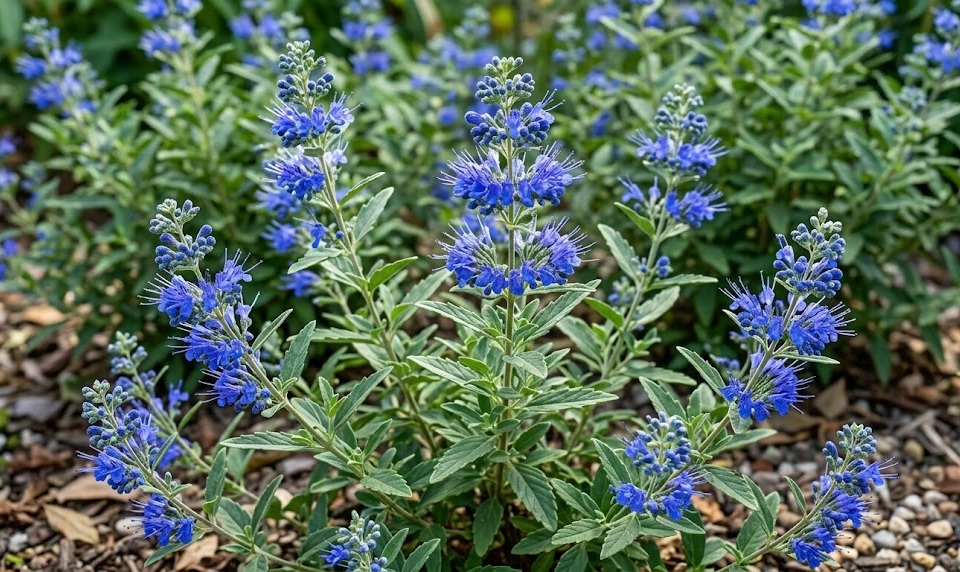

Mastering the art of pruning is essential for anyone wishing to maintain the bluebeard as a tidy, floriferous, and long-lived garden shrub. Due to its unique growth habit of flowering exclusively on new wood, the timing and technique of your cuts will directly determine the quality of its late-season display. Without regular intervention, the plant can quickly become woody, sparse, and prone to structural failure. By following a professional pruning regimen, you ensure that the shrub remains a vibrant and well-proportioned highlight of your landscape year after year.
The importance of hard spring pruning
The most critical pruning event for the bluebeard occurs in early spring, just as the new growth begins to emerge from the base or the lower stems. Because the flowers only form on the stems produced during the current season, failing to cut the plant back will result in blooms only at the tips of old, leggy branches. Professional gardeners typically cut the entire shrub back to within ten to fifteen centimeters of the ground. This “hard pruning” stimulates the plant to push out a flush of vigorous, healthy new shoots that will be covered in flowers by August.
Timing is everything when it comes to this spring rejuvenation; you should wait until the worst of the winter cold has passed but before the plant has invested too much energy into new foliage. If you prune too early, a late frost could damage the newly exposed buds and set the plant back. On the other hand, pruning too late means you are wasting the plant’s early-season energy on growth that you are just going to cut off anyway. Observing the swelling of the buds is the best indicator that it is time to reach for your bypass pruners.
When making your cuts, try to angle them slightly away from the center of the plant to prevent water from pooling on the cut surfaces. Use sharp, clean tools to ensure clean wounds that heal quickly and do not invite disease. You should remove any stems that are completely dead, damaged, or crossing over each other to improve the plant’s overall architecture. This process of thinning out the base allows more light and air to reach the center of the shrub, which is vital for its long-term health.
Don’t be afraid that you are being too aggressive; the bluebeard is incredibly resilient and actually thrives on this type of heavy-handed maintenance. Within just a few weeks of a hard spring pruning, you will see a dense mound of fresh, aromatic foliage beginning to take shape. This yearly reset keeps the plant in its most productive and attractive state, preventing it from becoming a tangled mess of unproductive wood. It is the single most effective thing you can do to ensure a professional-quality floral display.
More articles on this topic
Maintenance during the growing season
While the hard spring prune does most of the heavy lifting, a bit of attention during the summer can further enhance the plant’s appearance. If you notice that some stems are growing much faster than others and spoiling the rounded shape of the shrub, you can lightly tip them back to maintain symmetry. This light “shaping” should be done early in the season to give the plant time to recover and produce flower buds on the new tips. Avoid heavy pruning once the flower buds have started to form, as you will simply be cutting off your future display.
Deadheading, or the removal of spent flower clusters, is another task that can be performed during the peak blooming period in late summer. While not strictly necessary for the plant’s health, it can help to keep the shrub looking neat and tidy as the first flowers begin to fade. Some gardeners find that removing the early blossoms can sometimes encourage a second, smaller flush of flowers later in the autumn. However, many people choose to leave the dried flower heads on the plant for their interesting texture and to provide food for birds.
Keeping the interior of the shrub clear of yellowing leaves or small, weak twigs is another good mid-season habit. This improved airflow reduces the risk of foliar diseases like powdery mildew, which can sometimes appear during humid late-summer spells. If the plant becomes exceptionally large and starts to flop over, you can use subtle staking or specialized garden rings to provide some extra support. Proper maintenance ensures that the plant looks its best from the moment the first leaves appear until the last flower fades.
Observation is the key to successful mid-season maintenance; by spending a few minutes each week with your plant, you can catch small issues before they become major problems. If you see signs of pest damage or environmental stress, you can adjust your care routine accordingly. A professional gardener knows that maintenance is an ongoing conversation with the plant, not just a series of isolated tasks. This consistent attention results in a shrub that is always a credit to the garden.
More articles on this topic
Rejuvenating older and neglected specimens
If you have inherited a bluebeard that hasn’t been pruned for several years, it may look like a collection of thick, woody branches with very little foliage at the base. These neglected plants can often be brought back to life with a bit of “tough love” and a strategic pruning plan. Start by removing the oldest, thickest woody stems right at the ground level to make room for new shoots to emerge from the crown. This opens up the structure and allows light to penetrate the heart of the plant, which is the first step in rejuvenation.
You may need to use a small pruning saw or heavy-duty loppers for these larger cuts, as the wood of an old bluebeard can be surprisingly tough. Once the oldest wood is gone, cut the remaining stems back to about twenty centimeters to encourage fresh growth from dormant buds. It may take a season or two for the plant to fully regain its vigor and rounded shape, but the results are usually well worth the effort. Providing a bit of extra water and a light feeding can help the plant recover from this intensive surgery.
If a plant is so old and woody that even hard pruning doesn’t seem to stimulate new growth, it might be time to consider replacing it with a fresh specimen. Bluebeards are relatively short-lived shrubs, and sometimes a new, vigorous variety will perform much better than a tired, decades-old plant. However, most specimens respond remarkably well to rejuvenation pruning, giving them a second lease on life in the garden. It is a testament to the plant’s resilience that it can bounce back from such significant intervention.
Ultimately, the goal of all pruning is to work in harmony with the bluebeard’s natural growth cycle to produce the best possible visual result. By cutting back hard in the spring and maintaining a tidy habit throughout the year, you ensure that the shrub remains a source of joy and beauty. The aromatic leaves and stunning blue flowers are the reward for your professional approach to its care. Pruning is not just a chore, but a way of shaping the future of your garden.

Pruning bluebeard is one of those tasks where you really shouldn’t be afraid to be aggressive. Since it flowers on new wood, cutting it back to about 6 to 12 inches from the ground in late spring is the best way to ensure a compact and floriferous shrub. If you only do a light trim, the plant will quickly become woody and leggy, with fewer flowers and a less attractive form. I always wait until I see the first signs of green growth before I start my pruning. This ensures that I’m only cutting back the parts that are truly dormant and not accidentally removing any early growth.
I was always a bit hesitant to cut my bluebeard back that far, but your explanation about it flowering on new wood makes so much sense. Last year I only did a light trim and it definitely looked a bit sparse by the end of the season. I’ll be much more courageous with the shears this spring and see if I can get that fuller look you’re talking about. Is there a specific type of cut that you recommend, or just a straight heading back? Thank you for the encouraging and clear advice!
Another benefit of severe late-spring pruning is that it helps keep the plant’s size manageable in a smaller garden. Bluebeard can be surprisingly vigorous, and without regular cutting back, it can quickly outgrow its allotted space. By removing most of the old growth, you’re essentially resetting the plant every year and keeping it within its bounds. It also makes it much easier to integrate with other perennials that might otherwise be shaded out by a larger shrub. I’ve found it to be a very effective way to maintain a balanced and tidy border.